Showing posts with label MIT. Show all posts

Wednesday, August 5, 2009

Fusion Through a Hydrogen Economy Prism

Fusion has long suffered from the unfortunate impression of being a technology that is always 'thirty years into the future'. Reality has always been more complicated, even if sometimes the impression seems to ring true. Since nuclear fusion has been understood for longer than nuclear fission, the seeming lack of progress in commercializing fusion has appeared especially frustrating. While technical issues certainly remain to be addressed, the lack of a compelling future scenario within which nuclear fusion could be seen as a 'natural' energy solution has also been a barrier in the techno-scientific as well as policy discourse surrounding fusion.

If seen merely as an attempt to extract energy by fusing deuterium and tritium atoms (in the simplest conception), fusion appears less compelling than when seen as a natural part of a future carbon-free hydrogen economy. Deuterium (D) and tritium (T), after all, are isotopes of hydrogen, and the energy they yield on fusion is usefully seen as nuclear hydrogen energy. But what if the heat yielded by the neutrons in D-T fusion were further used in thermochemical schemes to create molecular hydrogen, from which chemical or electrochemical hydrogen energy could be extracted? If this is successfully done, the transportation sector of the future could well come to be powered indirectly by fusion.

I sketch out and elaborate this vision for a fusion-driven hydrogen economy of the future in my paper Nuclear Hydrogen Production: Re-examining the Fusion Option. I discuss more generally a vision for a Fusion Island (first sketched out by Nuttall & Glowacki), in which a complete hydrogen economy is envisaged - a scheme which uses all the isotopes of hydrogen (protium, deuterium, tritium) in all forms of matter (solid, liquid, gas, plasma). I discuss the new perspective in which fusion appears when seen through such a hydrogen economy prism, the policy implications thereof, and the likely present-day economic actors who might find such a vision of the future hydrogen economy sufficiently compelling to begin more actively participating in and funding fusion R&D today. Such a new perspective on fusion also sees both fusion and fission as complements instead of substitutes, and offers novel possibilities such as fusion breeders of fission fuels, as well as, for example, fusion-fission hybrids, and fission breeders of fusion fuels.


Update Presidential Science Adviser John Holdren, giving the Rose Lecture at MIT on 25 October 2010, discussed the role of fusion and fission in providing future energy options that would mitigate climate change. He mentioned that both fission and fusion represent energy sources with 'nearly inexhaustible' fuel supplies, and though the fusion fuel supply was 'much more inexhaustible' (paraphrasing), that was not much of an advantage over fission since fission was 'quite inexhaustible already'! However, he also stressed that he personally was in favor of funding fusion R&D, since the number of such 'nearly inexhaustible' fuel options was so small. However, this funding could only be sustained if the overall funding pie for energy R&D of all kinds was increased. Here's the video of part of his talk where he discusses this issue:


Dr. Holdren also presents a number of quantitative projections for the future of nuclear power that are worth summarizing in brief. The world currently has about 440 nuclear reactors which produce a total of 375 GWe of electrical energy, constituting about 13% of world total electricity supply, a percentage that is declining even as new plants are being built - since other sources of supply are growing faster in the aggregate. He feels that in the next 90 years, that is, out to the year 2100, the world total supply of nuclear power would fall considerably short of the 3500 GWe total that some analysts have hoped for [and which would have been an order of magnitude larger than current capacity].

He feels, however, that by the year 2050, a rough quintupling of current supply, to about 1700 GWe could happen. However, I found the most remarkable figure in his talk to be the estimate of Remaining Ultimately Recoverable Uranium (RURU) as 100 Million tons, based on a recent MIT study. What this means is that a once-through fuel cycle option using natural or lightly enriched uranium will remain competitive, and that reprocessing and breeding options may not need to be commercialized for several decades yet. Of course, the issue of how this recoverable uranium is actually distributed throughout the world, as well as how widely the technology of extraction will become available, remains. Different countries who feel uranium-constrained may still very well choose to pursue fuel cycle options that include reprocessing and breeding technologies.

Wednesday, July 15, 2009

US Energy Secretary Steven Chu Speaks at MIT 12 May 2009


MIT President Susan Hockfield introduces US Energy Secretary Steven Chu, who gave the Karl Taylor Compton Lecture at MIT, one of its most prestigious invited lectures. MIT's blurb to the video quotes Steve Chu in this talk: "Can we design a modern-day equivalent of Lincoln Labs or Los Alamos, focused on mission driven research, but also connected to fundamental research and the industrial world?". Steve Chu shows how all the great Nobel Prize winning work that was done at Bell Labs - all the people whose names you grew up hearing - Nyquist, Shannon, Penzias, Anderson, Bardeen, and many more - were actually trying to solve problems of quite an applied nature, but ended up revolutionizing their fields, making fundamental lasting contributions, that in most cases has been recognized by a Nobel Prize. (Chu himself was at Bell Labs at the beginning of his career, joining in the intake year 1977-78. Five people hired that year, including himself, are now Nobel Laureates.)

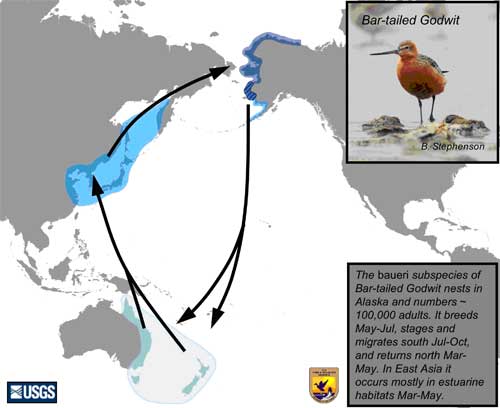
The talk is well worth hearing in its entirety. I really enjoyed it. There's both wit and wisdom in it, and aplenty. At one point Chu asks, for example: What does a Boeing 777 have in common with a Bar-tailed Godwit? A: They can both fly 11,000 km nonstop. (The B-t G is a bird that annually migrates from Alaska to New Zealand in the winter, and has 55% of its weight in body fat. Likewise the Boeing has 45% of its weight in jet fuel. The factoid is relevant to a point he makes about synthetic biology - using nature as an inspiration, but going beyond.)


One of the most impressive things about Chu is not only that he refocused his research toward Climate Change mitigation beginning 2004, but, partly in response, he has also increased his knowledge base in biology very significantly. Today, from biologically created fuels on the one hand, to artificial photosynthesis on the other, solutions to Climate Change mitigation inspired by biology are being actively researched. Chu emphasized in his talk that one of the reasons for the success of Bell Labs was the 'scientist-manager', who could quickly decide whether a given idea had merit or not - because he was a often a hands-on practitioner of the field himself. Chu clearly embodies this ideal.

Chu is an active Facebooker, and I salute him not only for the content he personally uploads there, but also for the infectious enthusiasm and compelling sense of mission he communicates to the world at large and to technically literate and younger audiences in particular.

Here's an earlier talk by Steve Chu when he was Director of the Lawrence Berkeley Laboratory, from back in 2005, on the same general subject of climate change science, possible biomimic solutions (both to sequestration and to energy production), and the culture of Bell Labs in the 1940s-1980s period:


And an even earlier talk given at UC Berkeley in May 2004, when he was still a Professor of Physics at Stanford: 'What can Physics say about Biology?'. This one is more technical, and is about how RNA transcription works at the sub-molecular scale. It is also about emboldening physicists to attempt answers to biological questions, and how ultimately, it might well be possible to explain life in terms of the 'jiggling and wiggling of atoms and molecules' (an old quote from Feynman that Steve Chu cites in the talk). Physics, he points out, is still young (only 400 years since Galileo) and the future of physics may well lie in biology. There is also the very faintest hint that climate change may be ultimately be stabilized by a biological solution, because he points out that the amplitude of temperature fluctuations on earth dropped markedly after agriculture was introduced. Cause and effect is not fully clear: for example, it could be that the temperature stabilization was exogenous, but made agriculture possible as a result. Equally, it is also possible that agriculture was a form of biological anthropogenic intervention that, operating on a large scale, stabilized climate, making life and civilization (and physics) possible. Here is the hint that if photosynthesis was properly understood as a 'physics problem', then an 'artificial photosynthesis' could be designed that could sequester (fix) carbon dioxide from the atmosphere more efficiently.